Occasional blogging, mostly of the long-form variety.
Showing posts with label Banned Books. Show all posts

Saturday, September 28, 2024

Banned Books Week 2024

It's the end of Banned Books Week, which celebrates banned and challenged books. My archive in the category is here. Last year, we looked at how an extremely small number of individuals drive a majority of book challenges.

The American Library Association's list of the most challenged books always has some continuity with previous years, and as usual, LGBT content is a frequent reason for challenges. Even more troubling than that, though, is the massive increase in both challenges and the number of targeted works:

ALA documented 4,240 unique book titles targeted for censorship in 2023—a 65% surge over 2022 numbers—as well as 1,247 demands to censor library books, materials, and resources. Pressure groups focused on public libraries in addition to targeting school libraries. The number of titles targeted for censorship at public libraries increased by 92% over the previous year, accounting for about 46% of all book challenges in 2023.

Of the record 4,240 unique titles targeted for censorship, the most challenged and reasons cited for censoring the books are listed below.

1. Gender Queer by Maia Kobabe
Number of challenges: 82
Challenged for: LGBTQIA+ content, claimed to be sexually explicit

2. All Boys Aren't Blue by George M. Johnson
Number of challenges: 71
Challenged for: LGBTQIA+ content, claimed to be sexually explicit

3. This Book is Gay by Juno Dawson
Number of challenges:71
Challenged for: LGBTQIA+ content, sex education, claimed to be sexually explicit

4. The Perks of Being a Wallflower by Stephen Chbosky
Number of challenges: 68
Challenged for: claimed to be sexually explicit, LGBTQIA+ content, rape, drugs, profanity

5. Flamer by Mike Curato
Number of challenges: 67
Challenged for: LGBTQIA+ content, claimed to be sexually explicit

6. The Bluest Eye by Toni Morrison
Number of challenges: 62
Challenged for: rape, incest, claimed to be sexually explicit, EDI content

7/8. (tie) Me and Earl and the Dying Girl by Jesse Andrews
Number of challenges:56
Challenged for: claimed to be sexually explicit, profanity

7/8. (tie) Tricks by Ellen Hopkins
Number of challenges: 56
Challenged for: claimed to be sexually explicit, drugs, rape, LGBTQIA+ content

9. Let's Talk About It: The Teen's Guide to Sex, Relationships, and Being a Human by Erika Moen and Matthew Nolan
Number of challenges: 55
Challenged for: claimed to be sexually explicit, sex education, LGBTQIA+ content

10. Sold by Patricia McCormick
Number of challenges: 53
Challenged for: claimed to be sexually explicit, rape


On its censorship by the numbers page, the ALA provides a neat interactive map (also embedded below) that shows which states have had the most book challenges over 10 years. Unsurprisingly, Texas and Florida have been the worst.

The downloads page compiles some of the ALA data and charts in poster formats, including the very interesting one below:

We've covered censorship in the U.S. fairly extensively over the years, and it's often interesting to read and discuss challenged books. I'm not going to delve into the works or statistics above this year, though. As it happens, my reading this year has included two banned books, but they weren't banned in the United States (as of yet; at least one would not be popular with the banning crowd). I've been reading more international comic books, including works by Moebius (Jean Giraud) and by Alberto Breccia, who was born in Uruguay but grew up and worked in Argentina. In 1968, Alberto Breccia and writer Héctor Germán Oesterheld started a series of comic book biographies about influential Latin American figures. The first one was Life of Che (Vida del Che), about Che Guevara, published mere months after his death. The second was Evita, the life and work of Eva Perón (Evita, vida y obra de Eva Perón), about Eva Peron. The Che book was banned and had copies seized and destroyed by the military dictatorship that called itself the "Argentine Revolution." As a result, Oesterheld halted the Eva Peron project. Unfortunately, he was later "disappeared" in 1977 along with his four daughters and their husbands by Argentina's last military dictatorship; all were presumably murdered. Alberto's son Enrique Breccia, a comic book artist himself who contributed to the Che book, saved the original artwork and scripts for both books, and eventually the Che book was republished and the Eva Peron book was published as originally conceived.

Alberto Breccia, who Frank Miller cites as a major influence, experimented with style often, so much so that, going by just the artwork, it would be easy not to realize that the black and white, pencil-and-ink artist of most of his works also produced the colorful and often grotesque artwork of 1984's Dracula or the black and white ink and watercolor artwork of 1983's Perramus. For Life of Che, Breccia used woodblocks, which creates an impressionistic feel, especially when paired with Oesterheld's script, which jumps about in time, shifts perspective, and often uses fragmentary text.

Life of Che isn't always easy to follow if you're not familiar with at least the broad strokes of Che Guevara's life, but Oesterheld and Breccia's original audience would know it. In terms of aesthetics, I thought the piece was bold, innovative and memorable. Reading more about the history of its publication and its creators made it even more interesting, and made me want to learn more. Good art can do that. I'm still working my way through Breccia's other available major works, but if you appreciate unconventional comic books/graphic novels, you'd probably find his work intriguing.

It's been observed that authoritarian regimes recognize the power of art, because they seek to control and ban it. The list of countries that have persecuted, imprisoned or "disappeared" writers and artists is sadly long. The United States, despite its other stains, has at least mostly avoided the more violent forms of artistic censorship. Its history does include the Hollywood blacklist, which meant jail time for some and the loss of careers for many more. Comic books were targeted during roughly the same era due to a scare campaign sparked by Fredric Wertham's shoddily researched book, Seduction of the Innocent. And the U.S. has engaged in plenty of other censorship, even if it's avoided the low bar of "Hey, we didn't send that writer to the gulag to die." Contemporary U.S. censorship efforts, overwhelmingly driven by conservative individuals and groups, remain harmful and troubling. But as with all activism, it's good to pause occasionally to enjoy what we're fighting for. This week, we're celebrating reading a good book or comic book or enjoying some other form of artwork.

Thursday, October 05, 2023

Banned Books Week 2023

It's Banned Books Week, which celebrates banned and challenged books. My archive in this category is here. Last year, we looked at how LGBTQ issues have been targeted, especially in Florida. Unfortunately, the situation has gotten worse: Recently, "librarians in public schools in Charlotte County, Florida, were instructed by the school district superintendent to remove all books with LGBTQ characters or themes from school and classroom libraries." So librarians were told that even books without sexually explicit content needed to be removed if any character is LGBTQ. (The district has since said that such books will remain available in school libraries, but for high school students only, and the books cannot be taught in class.) This stance is authoritarian and hostile to LGBTQ youth, as we covered last year, but it's also now an outright denial of reality, with conservatives both trying to pretend LGBTQ people don't exist and pretending that this gambit will somehow work.

Unsurprisingly, the American Library Association's list of the most challenged books of 2022 hasn't changed much since the previous year. This year, the list has 13 titles instead of 10, due to ties:

ALA documented 1,269 demands to censor library books and resources in 2022, the highest number of attempted book bans since ALA began compiling data about censorship in libraries more than 20 years ago. The unparalleled number of reported book challenges in 2022 nearly doubles the 729 book challenges reported in 2021. Of the record 2,571 unique titles targeted for censorship, the most challenged and reasons cited for censoring the books are listed below.

1. Gender Queer by Maia Kobabe
Number of challenges: 151
Challenged for: LGBTQIA+ content, claimed to be sexually explicit

2. All Boys Aren't Blue by George M. Johnson
Number of challenges: 86
Challenged for: LGBTQIA+ content, claimed to be sexually explicit

3. The Bluest Eye by Toni Morrison
Number of challenges: 73
Challenged for: depiction of sexual abuse, EDI content, claimed to be sexually explicit

4. Flamer by Mike Curato
Number of challenges: 62
Challenged for: LGBTQIA+ content, claimed to be sexually explicit

5. (tie) Looking for Alaska by John Green
Number of challenges: 55
Challenged for: LGBTQIA+ content, claimed to be sexually explicit

5. (tie) The Perks of Being a Wallflower by Stephen Chbosky
Number of challenges: 55
Challenged for: LGBTQIA+ content, claimed to be sexually explicit

7. Lawn Boy by Jonathan Evison
Number of challenges: 54
Challenged for: LGBTQIA+ content, claimed to be sexually explicit

8. The Absolutely True Diary of a Part-Time Indian by Sherman Alexie
Number of challenges: 52
Challenged for: profanity, claimed to be sexually explicit

9. Out of Darkness by Ashley Hope Perez
Number of challenges: 50
Challenged for: depictions of abuse, claimed to be sexually explicit

10. (tie) A Court of Mist and Fury by Sarah J. Maas
Number of challenges: 48
Challenged for: claimed to be sexually explicit

10. (tie) Crank by Ellen Hopkins
Number of challenges: 48
Challenged for: drug use, claimed to be sexually explicit

10. (tie) Me and Earl and the Dying Girl by Jesse Andrews
Number of challenges:48
Challenged for: profanity, claimed to be sexually explicit

10. (tie) This Book is Gay by Juno Dawson
Number of challenges:48
Challenged for: LGBTQIA+ content, providing sexual education, claimed to be sexually explicit


On its censorship by the numbers page, the ALA provides a map of which states have had the most book challenges (Texas is still the worst by far) and some other censorship charts. The downloads page compiles some of those charts in poster formats, including the one below (click for a larger view):

One of the troubling trends we covered last year is the rise in coordinated organizations, not individuals, bringing book challenges. But another problem is that an extremely small number of individuals drive a majority of book challenges. In both cases, the views of the majority, of professionals and the community, are often overruled. The Washington Post profiled one of those book-banning individuals, 48-year-old Spotsylvania, Virginia, resident Jennifer Petersen, in a 9/28/23 piece, "She challenges one school book a week. She says she’ll never stop." It's worth reading the whole thing, but I'll provide some key excerpts, including the opening:

Jennifer Petersen keeps 73 school books she detests in her basement.

She ordered most from Amazon. In the last year, she read each one. She highlighted and typed up excerpts from more than 1,300 pages — of the 24,000-plus pages she read — that she says depict sexual acts. Then she filed challenges against 71 of the books with Spotsylvania County Public Schools, the Virginia district where one of her children is a student and the other is a recent graduate. (Two books were removed before she could challenge them.)

Across 434 pages of challenges — longer than many of the books she objected to — Petersen offered variations on a theme.

“This book reads like a how to guide for raping teens,” she wrote of one.

“The book normalizes teen sex and ... glorifies and incites teens to have sex,” she wrote of another.

“What is the fascination,” she asked of a third, “with so many of these books containing detailed sexual content?”

Petersen, 48, is part of a small army of book objectors nationwide. School book challenges reached historic highs in America in 2021 and 2022, according to the American Library Association. And just a handful of people are driving those records. A Washington Post analysis of thousands of challenges nationwide found that 60 percent of all challenges in the 2021-2022 school year came from 11 adults, each of whom objected to dozens — sometimes close to 100 — of books in their districts.

Petersen is one of these serial filers, whose actions have riven her community, earning her fervent admiration and criticism.


What indeed is Petersen's fascination with reading books she finds objectionable? It's worth repeating the key problem with the book-banning crowd: they're free not to read books they don't like. They can also prevent their children from reading those books. But they're fighting to prevent anyone else from reading those books. That shouldn't be their call. Libraries can and do have challenge systems in place, but adding a title to a library generally involves plenty of discussion and research first, including public input. Removing a book should have a high threshold. A book that's considered a classic, important, or is generally well-regarded shouldn't be removed and denied to the rest of the community just because one person or a small group doesn't like it.

In Petersen's case, she objects to sex the most, but of the books she's challenged, according to the WaPo analysis, 25% are by or about people of color or deal with issues of race, and 27% feature LGBTQ characters. Her book challenges, as of the article, totaled 434 pages, "longer than most of the books she challenged," and 6,556 words. She's definitely been disruptive:

Petersen’s district has lurched from one book controversy to another in recent years. In 2021, the Spotsylvania school board voted to remove sexually explicit tomes from libraries, with two members suggesting burning them — remarks that drew national scorn. The board later rescinded that decision. Then, this spring, the superintendent pulled 14 books for “sexually explicit material” — including Toni Morrison’s “Beloved” — and suggested shutting down school libraries to address budget shortfalls. That proposal went nowhere, but the school board voted to make it easier to yank books with sexual content.

Much of the turmoil has been driven, directly or indirectly, by Petersen. In the decades before she began filing challenges, the district saw almost no objections, maybe one every five to 10 years, library staff said. Now, in addition to her flurry of filings, Petersen attends almost every school board meeting, sometimes reading aloud graphic passages from the books she is challenging — mostly sentences too explicit to be printed in this newspaper. . . .

To some, Petersen is a fanatic bent on crushing schools under the weight of prudish objections.

“This whole effort has been a waste of money, time and resources,” school board member Nicole Cole said. (The district said it has not tracked the money, time and work it spent responding to Petersen’s requests, although a top library staffer estimated that a team of 11 people spent 40 hours per week on her challenges last school year.)


Petersen is causing the district to lose staff as well as considerable time and money. She can't complain that her challenges aren't been taken seriously, because her challenges have been reviewed multiple times:

Cole said the district has lost staff members because of what Petersen is doing, although she could not provide an exact number. The district did not answer questions asking about Petersen’s effect on its personnel.

Kimberly Allen, library liaison and high school librarian for the district, estimates that, last school year, fielding Petersen’s challenges required 40 hours of labor per week from her and a team of 10 high school librarians, work they mostly did on their own time, late in the evening and on weekends, because they still had to keep up with their regular jobs. Neither she nor her colleagues received overtime pay, Allen said.

Per school district policy, each challenge at a campus required the principal, sometimes working with librarians, to form a school-level review committee comprising a half-dozen teachers and parents. Each committee recommended keeping the titles, Allen said.

But Petersen appealed every decision, leading to the formation of a second, district-level review committee, comprising another handful of teachers and parents — these selected by the Office of Teaching and Learning. Those panels, too, recommended keeping the books.

The superintendent has the final say: He intervened to pull 14 books this spring. Another 29 books await his verdict. (Five are still at the district committee stage.) So far, none of Petersen’s challenges has been rejected outright. . . .

In “most of the books [she challenged], we do not agree with her assessment, because ... you cannot base the merit of a book on just its parts,” Allen said. “She is weighing the whole book on single passages.”


Petersen is being given fair hearings; it's just that she doesn't abide by the outcomes. A single group of librarians, teachers, and parents reviewing the books and approving them should be sufficient – Petersen brought a challenge, the community considered and it approved the book, she doesn't have to read the book but the community can, case closed. But she's also forcing a second group to review the book – and still getting the same result. The superintendent should abide by those committee decisions, but isn't, presumably to try to appease Petersen. So two people (or one person and a kowtower) are imposing their will on professionals and the community. These are not healthy dynamics.

I've seen some people suggest a limit on book challenges, and that seems like a good idea. One challenge per person per month, perhaps. Petersen and others like her could still bring challenges, but not steal so much time (often unpaid) from librarians and teachers and effectively harass them.

One of the odder asides in the profile of Petersen is briefly mentioning that she's a Buddhist, not a conservative Christian. Unfortunately, the profile doesn't delve any further into Petersen's claimed Buddhism, and avoids raising the issue that the principles of Buddhism are pretty incompatible with book banning. (For that matter, the principles of Christianity don't really suggest book banning, either, but for religious conservatives, the key part has always been the social conservatism, and the religion is more of a gloss, with religious principles selectively followed or just outright ignored.)

It's worth noting that Petersen is citing bad social science as part of her justification for obsessing about sex in books:

In some challenges, [Petersen] cited scientific research to back up her contention children could be harmed by reading about sex acts — in particular a 2020 paper she found in the National Institutes of Health’s online library that said “exposure to sexually explicit media in early adolescence had a substantive relationship with risky sexual behavior” in early adulthood.

In that study, the authors suggested one solution would be for schoolteachers and parents to provide teens with “appropriate information on sexuality,” including sex education classes. Another study published two years later found that exposure to sexually explicit material made some boys happy and upset some girls, but “the majority of adolescents felt neutral, which suggests that seeing sexually explicit materials is not as distressing as originally thought.”


There's also the issue of poor judgment on Petersen's part. As Kimberly Allen points out, Petersen is reading passages out of context and "you cannot base the merit of a book on just its parts." Context matters. Good librarians, teachers and sensible adults and readers understand this:

Gina Terry, a parent and former Spotsylvania English teacher, said in an interview that sexually explicit material is not always harmful — instead, it can be educational. She gave the example of “Sold,” a book told from the perspective of a 13-year-old girl sold into sexual slavery. Terry praised the writing as “haunting,” although she acknowledged the text deals with complex, difficult and dark subjects.

“There is absolutely discomfort. But the whole point of the book is to bring attention to the real plight of real girls,” Terry said. “By saying it needs to be banned, we’ve taken these real stories about real people and denied them existence on our shelves.”


Terry makes excellent points, and it's also important to remember that a teacher in a classroom can help guide students through difficult material. So can parents, if they're not uncomfortable discussing such material with their children. But book banners tend to be the parents or other adults who are extremely uncomfortable having such discussions, all the more so if sex, sexuality, race, or racism is involved. Petersen certainly seems to fall in that category. Two passages leap out from the article:

Petersen, too, was alarmed. If children under 18 read about sex, she worries, they will be more likely to engage in unsafe sex or fall victim to sexual predators.


This makes no sense. Students who are taught age-appropriate, accurate sex education (and generally dealt with truthfully) are less likely to have unsafe sex, get sexually transmitted diseases, or get pregnant. They're also presumably less likely to "fall victim to sexual predators." This is just the familiar mentality of a parent uncomfortable talking about sex and sexuality with her kids, even teenagers. It's the same mentality that leads to reality-denying "abstinence only" sex ed classes in conservative states and districts that increase the teen pregnancy rates. It's the same mindset that tries to deny that LGBTQ people, including kids and teenagers, exist.

The second passage is also a doozy:

In that first batch [of challenges], [Petersen] wrote of Beloved: “The book illustrates the horrors of our history. However, the passages outlined do not add to the story and they are sexually explicit.”


Beloved is a good, powerful novel, which won the Pulitzer Prize, was a finalist for the National Book Award, and one of the reasons author Toni Morrison won the Nobel Prize in Literature. Evidently, many people think it has value. (At the school where I taught, it was part of the English 12 curriculum at least one year.) But Jennifer Petersen, self-appointed literary critic and protector of the public, arrogantly thinks she knows better than all of them, that the sex scenes Toni Morrison included are unnecessary, and the book should be banned. It's not enough for Petersen and other book banners that they are free to disapprove of a book, don't need to read it, and can even write scathing reviews if they want to. They want to prevent anyone else from having the opportunity to read it and judge it for themselves. In this specific case, as is the case with many challenged books, readers would be denied a memorable, moving experience.

Part of being a healthy, thriving democracy is that people like Jennifer Petersen get their say. But another part of a healthy, thriving democracy is that other people get their say, too, and Petersen and her ilk don't get to make decisions for everyone else. Good public libraries and good public schools are essential for developing happy, inquisitive children, for helping teenagers explore adulthood, and for developing good citizens. Art is capable of saying more than one thing at once, and can be complex and multilayered. Art can be a rich and wonderful experience. If prudes and scolds wish to deny themselves that, that's sad but their right, but the rest of us must stay free to revel in the wonders of the arts (and share good book recommendations).


Saturday, September 24, 2022

Banned Book Week 2022

We're at the tail end of Banned Books Week, which celebrates banned and challenged books. My archive in this category is here. This year witnesses some familiar trends and some troubling new escalations. The familiar are bans and challenges to books that deal with sexuality or race. What's newer is a more coordinated effort to ban books from conservative groups and politicians, and the level of harassment of librarians, teachers and students.

The American Library Association keeps a list of frequently challenged books and updates the top 10 most challenged books every year. In 2021:

The ALA Office for Intellectual Freedom tracked 729 challenges to library, school, and university materials and services in 2021. Of the 1597 books that were targeted, here are the most challenged, along with the reasons cited for censoring the books:

1. Gender Queer by Maia Kobabe
Reasons: Banned, challenged, and restricted for LGBTQIA+ content, and because it was considered to have sexually explicit images

2. Lawn Boy by Jonathan Evison
Reasons: Banned and challenged for LGBTQIA+ content and because it was considered to be sexually explicit

3. All Boys Aren't Blue by George M. Johnson
Reasons: Banned and challenged for LGBTQIA+ content, profanity, and because it was considered to be sexually explicit

4. Out of Darkness by Ashley Hope Perez
Reasons: Banned, challenged, and restricted for depictions of abuse and because it was considered to be sexually explicit

5. The Hate U Give by Angie Thomas
Reasons: Banned and challenged for profanity, violence, and because it was thought to promote an anti-police message and indoctrination of a social agenda

6. The Absolutely True Diary of a Part-Time Indian by Sherman Alexie
Reasons: Banned and challenged for profanity, sexual references and use of a derogatory term

7. Me and Earl and the Dying Girl by Jesse Andrews
Reasons: Banned and challenged because it was considered sexually explicit and degrading to women

8. The Bluest Eye by Toni Morrison
Reasons: Banned and challenged because it depicts child sexual abuse and was considered sexually explicit

9. This Book is Gay by Juno Dawson
Reasons: Banned, challenged, relocated, and restricted for providing sexual education and LGBTQIA+ content.

10. Beyond Magenta by Susan Kuklin
Reasons: Banned and challenged for LGBTQIA+ content and because it was considered to be sexually explicit.


It's not surprising to see that many books were challenged for LGBTQIA+ issues; that's been a trend for many years. Meanwhile, nationally in the past few years, conservatives have been coordinating more in their opposition to LGBTQ rights and acceptance. This year, Florida's Republican governor, Ron DeSantis, heavily pushed what's been dubbed the "Don't Say Gay" law, which:

. . . bans lessons on sexual orientation and gender identity in kindergarten through third grade as well as material that is not deemed age-appropriate.

Most educators do not expect a major change in lesson plans — one of the key reasons critics cited in saying the law was unnecessary was that teachers do not cover such subjects in early grades anyway.

But some worry it sets a tone that will leave LGBTQ teachers and kids feeling ostracized.

"The messaging of this law is horrible. It's toxic, it's discriminatory," said Gretchen Robinson, a lesbian high school teacher in Orange County. "It targets, very obviously, LGBTQ students, it 'others' them, and that is not OK."


These threats aren't theoretical. A recent PBS NewsHour segment interviewed two Florida student LGBTQ activists. One of them, Will Larkins, related that since the law passed:

I have noticed an uptick in anti-LGBTQ hate crimes and general attitude toward people.

I have always dealt with homophobia at high school. I have always been called slurs and stuff, but it has gotten worse since the school year started. A lot of things have happened. Most recently, my sister and I were followed home after a football game by 15 guys, who called us slurs, told us to kill ourselves.

It was really scary. They said they were going to beat us up. They chased us. We got lost in the trees.

The other thing I have noticed really — really that I know for a fact came from this is more of the rhetoric that's coming from the state legislature and our governor, such as the grooming rhetoric, calling queer people pedophiles, has now trickled down to the high school level, and high school bullies are using the same language as our politicians, who are pushing for this bill and other anti-LGBTQ laws.


Larkins also identifies the backlash factor:

I think it's interesting, because, most recently, for the first time ever, queer people have become mainstream. This is a new thing. This is 2010s onward.

And we have gotten to a point where we're being generally accepted by society. So now homophobic and anti-queer legislators and lawmakers are put pushing back against it. And when they're pushing back against it, it is dignifying and it is backing up these bullies. It is telling them that you are right in being homophobic, when, before, we were at a point where these people knew that they were wrong.

But now they're being backed up by Ron DeSantis.


This harassment and bullying has real consequences. As Larkins also points out:

Queer teens are four times more likely to die by suicide than their straight counterparts, and 52 percent of trans youth last year said they seriously considered suicide.

So where's that coming from? That is coming from these laws. That is coming from this rhetoric, and that is coming from the bullies who see it on TV, see it on FOX News and, pick it up, and use it to harm people like us.


On the book-banning and challenging front, Florida is hardly alone. As The Texas Tribune covers:

Texas banned more books from school libraries this past year than any other state in the nation, targeting titles centering on race, racism, abortion and LGBTQ representation and issues, according to a new analysis by PEN America, a nonprofit organization advocating for free speech.

The report released on Monday found that school administrators in Texas have banned 801 books across 22 school districts, and 174 titles were banned at least twice between July 2021 through June 2022. PEN America defines a ban as any action taken against a book based on its content after challenges from parents or lawmakers.

The most frequent books removed included "Gender Queer: A Memoir" by Maia Kobabe, which depicts Kobabe's journey of gender identity and sexual orientation; "The Bluest Eye" by Toni Morrison; "Roe v. Wade: A Woman's Choice?" by Susan Dudley Gold; "Out of Darkness" by Ashley Hope Pérez, which follows a love story between a Mexican American teenage girl and a Black teen boy in 1930s East Texas; and "All Boys Aren't Blue" by George M. Johnson, a personal account of growing up black and queer in Plainfield, New Jersey.

"This censorious movement is turning our public schools into political battlegrounds, driving wedges within communities, forcing teachers and librarians from their jobs, and casting a chill over the spirit of open inquiry and intellectual freedom that underpin a flourishing democracy," Suzanne Nossel, PEN America's chief executive officer, said in a statement.

Across the country, PEN America found that 1,648 unique titles had been banned by schools. Of these titles, 41% address LGBTQ themes or have protagonists or prominent secondary characters who are LGBTQ. Another 40% of these books contains protagonists or prominent secondary characters of color.

Summer Lopez, the chief program officer of free expression at PEN America, said what's notable about these book bans is that most are on books that families and children can elect to read, not any required reading.

Florida and Pennsylvania followed Texas as the states with the most bans, respectively. Florida banned 566 books, and 457 titles were banned in Pennsylvania, where a majority of books were removed from one school district in York County, which is known as being more conservative.

Lopez said her organization could not recall a previous year with as many reported book bans.


These bans and challenges often aren't due to individual parents. As NPR highlights, citing the same PEN report and also the ALA:

According to the report, the surge in book bans is a result of a network of local political and advocacy groups targeting books with LGBTQ+ characters and storylines, and books involving characters of color.

"While we think of book bans as the work of individual concerned citizens, our report demonstrates that today's wave of bans represents a coordinated campaign to banish books being waged by sophisticated, ideological and well-resourced advocacy organizations," said Suzanne Nossel, chief executive officer of PEN America. . . .

PEN America has identified at least 50 groups working at local, state and national levels advocating for books to be removed from school curriculums and school library shelves. According to the report, this is a relatively recent occurrence. Many of the groups, such as Moms for Liberty, began in 2021.

The American Library Association also put out a report late last week that indicates challenges to books continue to rise. Based on their records, 1,651 unique titles were targeted between January and August this year — in 681 attempts to ban or restrict library resources. The ALA's Office for Intellectual Freedom counted 729 challenges to library, school, and university materials in all of 2021 — which rose four fold from the prior year.

The ALA also points to more conservative political groups pushing to ban books in schools and libraries across the country. According to the ALA report, the actions from these groups are mostly focused on YA books involving race, gender, and sexual identity — echoing the findings from the PEN America study.


It's also important to point out that these conservative groups almost always argue in bad faith. In August, the PBS NewsHour had a good segment about parental rights and censorship, which featured an interview with Tina Descovich, the founder of the aforementioned Moms for Liberty, who claimed:

We do not stand by or believe that we are banning books. We want to make sure books are age-appropriate for our children.

And we're looking for solutions together, like I mentioned. There's options to put books in a place where you need parental permission or a practical opt-out or parental opt-in, whatever each local district decides, but there is no hard ban. . . .

Even educators aren't necessarily checking what's, what's in every one of these books. A lot of times, I have talked to school librarians that order books through lists that they have depended on historically.

And so they haven't read every single book that they have allowed into the library. It takes kind of all hands on deck. And when it comes to what our children, especially our youngest children, are being exposed to, parents need to have a voice in that conversation.


This is disingenuous. The NewsHour also interviewed Kelly Jensen, a former librarian and editor at the website Book Riot, which makes book recommendations. As Jensen points out:

Parents have always had a say in their education. They have always had the right to opt their children out of lessons, out of readings that they don't feel appropriate for the students. It's always been a right that they have had.

What the argument that they're trying to make now is that professionals who use professional tools to determine materials that are appropriate for students are not useful tools for determining what should or should not be in a library or a classroom.

And the argument is that librarians and educators can't rely on these tools that are created and sustained by professionals in education, in librarianship, in child develop development, and should instead listen to parents who are trying to undermine the professionals and the professional institutions of education and librarianship.


Jensen also points out that these book-banning groups are more extreme than most conservative and Republican parents:

So they have been successful in getting a number of books pulled from school libraries. And they have had a lot of pull in the legislation that we have seen come out of Florida in particular.

In Florida, here's a good example. To showcase just how small a group this is speaking on behalf of parents more broadly, in Polk County, which is the seventh largest district in Florida, reliably Republican, there are about 110,000 students. And Polk County just implemented a system where parents could opt their students out of a number of books that have come under fire.

And of all of those students, less than 160 kids have had their parents opt them out of access to these books. So, really, truly, it's a very small number. And so what they're trying to do is revoke access to this material for all students, and not just their students.


This is far from the first time we've seen a conservative minority try to impose its will on the majority when it comes to book access or otherwise. My 2011 post for Banned Books Week covered a Georgia school board that banned well-regarded books Brave New World, Of Mice and Men and Native Son due to objections from a local church minister, ignoring the recommendations of twenty educators but also ignoring that school parents gave permission to read the books. My 2015 post on Banned Books Week covered an Iowa school district that banned Sherman Alexie's book, The Absolutely True Diary of a Part-Time Indian, due to objections by a single parent, "in blatant violation of the district's own policies regarding challenged materials." These conservative groups and individuals reject the expertise of educators and librarians, and despite their claims to be fighting for parents, ignore parents' actual input in any sort of fair, democratic process.

We've explored these dynamics many times for Banned Books Week, but parents already have the right to opt-out their children from reading particular books on the school curriculum. For public libraries, parents can prevent their children from checking out certain books if they object. What book banning is really about is preventing anyone else from reading those books. To quote from my 2010 post:

These are important distinctions. There's nothing wrong with criticizing a book on aesthetic or other grounds, but it's quite another thing to try to deny other people the right to read it. Parents can choose that their child can't check out a book from the library, but they don't get to decide that for every other child, and certainly not for every other adult. For school curriculums, it can get a bit trickier, but such things as age-appropriateness are typically discussed at length. Parents (the most common objectors) have a voice, and while the specific laws and guidelines vary by state, county or school system, parental opt-outs are commonly available.

Perhaps more importantly, when a book is taught in the curriculum, it is discussed in class with students. Parents can also discuss it with their kids. The same goes for books checked out of the library - parents can discuss it with their kids, or not let their kids check a book out. Art is capable of saying more than one thing at a time, and stories often contain ambiguity and room for interpretation. These factors make literal or authoritarian-minded people uncomfortable, but they're pretty unavoidable if you study literature and poetry. It's common for English curriculums in secondary education to try to foster critical thinking skills and a tolerance for ambiguity. Parents who think of education as indoctrination - or who favor indoctrination, only the type they want – tend not to understand or like that.

I'm not dismissive of parental anxieties, but as with questions brought up by students in class, normally they can be addressed. Racial slurs in Huck Finn, The Elephant Man and Invisible Man can and are discussed in the classroom, and that's usually a better, safer place to do so. The reality is that parental discomfort generally emerges when a parent doesn't want to discuss something with their kid. Age and maturity are legitimate issues, of course, but teenagers are often more mature or informed than their parents admit. It's that same maturity, not the lack of it, that can further unnerve an anxious parent. Navigating all this is an important part of growing up for students, and a crucial part of good parenting for the parents. Challenging a book is often just a proxy for deeper issues . . .


We've also seen conservative attempts to fire librarians before (a 2008 post, which links a follow-up piece, covers Sarah Palin's book-banning efforts as Wasilla mayor). But I don't remember seeing the degree of harassment librarians have been facing, as reported in an August Washington Post article, "A Mich. library refused to remove an LGBTQ book. The town defunded it."

Two librarians had quit since the trouble began, and Kaitlin McLaughlin didn't want to be the third.

But the same term kept coming up in board meetings and on yard signs, making her feel awkward and wrongly accused: grooming.

People in this western Michigan farming town said the Patmos Library was "grooming" children and, according to fliers that one group printed, promoting an "LGBTQ ideology." They said bookshelves meant for young readers featured same-sex pornography. They called the staff pedophiles, McLaughlin said. Then one August morning, they voted to defund Jamestown's only public library, jeopardizing the institution's future as neighbors clashed over who gets to decide free speech in this deep-red corner of America. . . .

Jamestown, with a population of nearly 10,000, has Christian conservative roots. Dutch last names are common — a legacy of the Calvinists who split from the Netherlands in the mid-1800s to settle here and practice a stricter form of Christianity. The county celebrates this heritage each spring with a tulip festival.

The 22-year-old library hosts birthday parties, bridal showers, HOA meetings and blood drives. Residents praised it as a haven for all ages until controversy ignited with an award for the best teen books.


The problems started when the library director at the time, Amber McLain, ordered copies of all 10 young adult books named winners by the National Library Association, which included:

. . . a memoir about growing up nonbinary called "Gender Queer."

Pink-haired and openly queer, the 30-year-old [Amber McLain] stood out in a county that hadn't backed a Democrat for president since 1864. Yet people embraced McLain, her former colleagues and patrons said.

"She helped bring my son out of his shell," said one mother, Sara Crockett, checking out a STEM toy kit on a recent afternoon. "He'd light up when he saw her."

"I miss Miss Amber," 5-year-old Cecil said, clutching her hand.

Nobody complained about McLain until last November, after video of a Virginia mother condemning "Gender Queer" as "pornographic" took off on social media and protests against the memoir spread nationwide.

The 239-page graphic novel contains illustrations of masturbation, a sex toy and oral sex, as well as depictions of menstrual blood. Fans saw the scenes as part of the author's coming-of-age experience, while critics blasted them as sabotage to developing minds. "Gender Queer" became the most banned book of 2021.

Some parents found a copy in the Patmos Library and created a Facebook group called "Jamestown Conservatives" pushing for its removal. One of the organizers, Lauren Nykamp, declined to be interviewed but responded to some of The Washington Post's questions over text. "This is not about LGBTQ material," she said. "It is about sexualized material."


Nothing would dissuade the conservative activists, some of whom got pretty aggressive:

McLain countered that 90 out of their roughly 67,000 books had an LGBTQ keyword. She said they spent the most money on Christian fiction. . . .

A lawyer had reviewed the book and determined it wasn't pornographic, McLain replied. Still, given the mature content, she'd initially placed it in the adult section — near novels with heterosexual sex scenes. As the objections mounted, though, she moved "Gender Queer" behind the counter, making it available only upon request.

"We have to represent every segment of the population," McLain said, "not just the vast majority."

The backlash grew from there. One March day, staffers said, a woman showed up at the library, recording a video and yelling: "Where is she? Where is the pink-haired freak? Where is the pedophile librarian?"

McLain hadn't been there. The library board president told her about the incident, saying she could work remotely if she'd like. (McLain declined to be interviewed for this story but confirmed the sequence of events to The Post.) Citing harassment, she opted to quit.

So did her replacement, Matthew Lawrence, 25, who transferred to a library in another town — he doesn't feel comfortable saying where — after a tense encounter in June. A patron had demanded to know if he was gay, he said, and insisted he remove a rainbow-hued sign that said: "Please use the other door."

The environment had grown hostile, Lawrence said, but seeing the local official join the protest against "Gender Queer" ultimately motivated him to leave.

"The complaint is that kids are going to pick it up and see things they can't unsee," he said. "The easiest way to avoid that is to parent your children."


Lawrence is absolutely correct, but parenting their own children never seems to be a popular solution for conservative activists. Instead, "On Election Day in August, about a third of the town's voters turned out. A slim majority chose to defund the library." (The library has since received enough donations to stay open, but the vote doesn't speak well for the community.)

The problem isn't limited to rural Michigan. Amanda Jones, an award-winning librarian in Louisiana, has faced similar harassment and is fighting back, but she's far from alone in dealing with such attacks:

Nationwide, school districts have been bombarded by conservative activists and parents over the past year demanding that books with sexual references or that discuss racial conflict, often by authors of color or those who are LGBTQ, be purged from campuses. Those demands have slowly moved toward public libraries in recent months.

Many conservative activists have referred to people who defend the books as “groomers,” comparing them to child molesters. The Proud Boys, an extremist hate group, has barged into LGBTQ-themed reading events in several libraries, insisting they need to protect children. Some librarians have said they no longer feel safe serving in their roles.

Jones, the 2021 Louisiana Association of Computer Using Educators Middle School Teacher of the Year and the 2021 School Library Journal’s Librarian of the Year, said more than 200 librarians have reached out to her as the insults on Facebook spread. Many claimed they had been victims of similar verbal and online abuse in the past two years. More than 600 people donated a combined $20,000 for Jones on GoFundMe so she could respond with legal action.


Challenging and banning books is nothing new, but such efforts should always be fought. The increased scope and coordination of these censorship efforts is troubling, as is the sheer nastiness and sometimes outright delusion of some of these attacks. They reflect dangerous authoritarianism and bigotry in many areas of the country, dynamics we've witnessed in far too many other political arenas. Legitimate parental concerns have already been heard. But fear, bigotry and open hostility toward students, teachers and librarians – as well as toward public schools and libraries – have no value and do great harm.

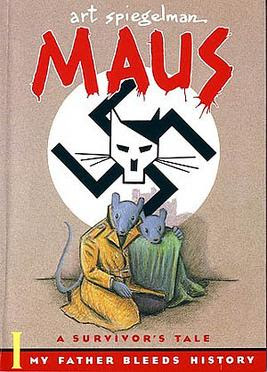
(Earlier this year, I wrote about efforts to ban Maus.)

Thursday, January 27, 2022

Maus Banned

Just in time for International Holocaust Remembrance Day, a Tennessee school district has banned Maus, an amazing, Pulitzer-winning graphic novel by Art Spiegelman about his family but especially his father, Vladek, who survived the Holocaust. The Associated Press reports that the ban was...

...due to "inappropriate language" and an illustration of a nude woman, according to minutes from a board meeting. . . .

In an interview, Spiegelman told CNBC he was "baffled" by the school board's decision and called the action "Orwellian."

"It's leaving me with my jaw open, like, 'What?'" he said.

The decision comes as conservative officials across the country have increasingly tried to limit the type of books that children are exposed to, including books that address structural racism and LGBTQ issues. The Republican governors in South Carolina and Texas have called on superintendents to perform a systemic review of "inappropriate" materials in their states' schools.

The minutes from the school board meeting indicate objections over some of the language used in "Maus." At first, Director of Schools Lee Parkison suggested redacting it "to get rid of the eight curse words and the picture of the woman that was objected to."

The nude woman is drawn as a mouse. In the graphic novel, Jews are drawn as mice and the Nazis are drawn as cats. . . .

Randi Weingarten, the president of the American Federation of Teachers, which does not play a role in McMinn County, noted the timing of the news on Twitter. Weingarten, who is Jewish, pointed out that Thursday is International Holocaust Remembrance Day.

"Yes it is uncomfortable to talk about genocide, but it is our history and educating about it helps us not repeat this horror," Weingarten said.

The U.S. Holocaust Museum tweeted that "Maus has played a vital role in educating about the Holocaust through sharing detailed and personal experiences of victims and survivors. . . .

"Teaching about the Holocaust using books like Maus can inspire students to think critically about the past and their own roles and responsibilities today."

The Tennessee school board emphasized in the minutes that they did not object to teaching about the Holocaust but some were concerned the work was not age-appropriate.


This is a stunningly bad if not entirely surprising decision. It sure seems to be yet another case of conservatives rejecting good art (and accurate history) out of prudishness and a desire to control their children. But such attempts, in addition to being harmful, rarely succeed in the long run.

As I've written before, Maus is a good introduction to the Holocaust. I used excerpts from it when I was teaching high school, at least one other colleague taught the entire series, and I knew some students read it on their own. I wouldn't give Maus to elementary school kids, but it's completely appropriate for high school students and many junior high students as well.

When I first saw the cover of Maus and heard the pitch – Jews as mice and Nazis as cats?!? – my concern was that it seemed like a cartoonish, oversimplified approach to the Holocaust. But I heard from several people who read Maus and assured me it was not simplistic, and was actually really good. That's all true, and the series is well worth checking out if you haven't yet.

Maus recounts, in detail, what happened to Art Spiegelman's father Vladek and how he survived in Nazi-occupied Poland and later Auschwitz, through luck but also ingenuity and courage. Spiegelman also depicts his fraught relationship with his father in the present day and Vladek's failings, as well as his own. Spiegelman even interrogates the creation of Maus itself and questions if depicting Jews, Nazis, and other groups as animals trivializes the Holocaust, and whether the series' success means he's exploiting a great tragedy. Maus is a complex, multilayered work, suitable for younger readers, and interesting and instructive as a Holocaust survivor's story, but it also raising some pretty significant questions about the nature of history, art, memory, and judgment. It's an engaging read, and can also be a bit emotionally exhausting, as pretty much any good, honest Holocaust tale is.

Something positive has come out of the ban, because a number of people – some famous, some not – are buying copying of Maus and donating them to Tennessee libraries. And the news stories about the ban is introducing new people to the existence of Maus. Maybe they'll check it out to see what all the fuss is about. Conservative attempts to ban something can backfire.

Years ago I lent my copies of Maus to my father, who had introduced me to comics, and he was impressed by the series as well. From where I'm sitting, I can glance over to a bookcase and see those same copies of Maus, sitting atop a copy of Primo Levi's The Drowned and the Saved. That's also an amazing work, but should only be read when someone's well-acquainted with the Holocaust already. Maus has a great track record in that regard, introducing people to the Holocaust. Let students read it, and may the efforts to provide more copies in Tennessee libraries and elsewhere flourish.

Thursday, September 30, 2021

Banned Books Week 2021

Happy Banned Books Week, celebrating banned and challenged books! Here's the category in my archives, with posts covering issues of censorship but also specific books. The site linked above tends not to keep old content, so I prefer to link the American Library Association's main site instead for specific lists. On the frequently challenged books page, the Top 10 Most Challenged Books of 2020 deal with issues of sexuality as usual, but this time, issues of race show up more often.

The ALA Office for Intellectual Freedom tracked 156 challenges to library, school, and university materials and services in 2020. Of the 273 books that were targeted, here are the most challenged, along with the reasons cited for censoring the books:

1. George by Alex Gino
Reasons: Challenged, banned, and restricted for LGBTQIA+ content, conflicting with a religious viewpoint, and not reflecting “the values of our community”

2. Stamped: Racism, Antiracism, and You by Ibram X. Kendi and Jason Reynolds
Reasons: Banned and challenged because of author’s public statements, and because of claims that the book contains “selective storytelling incidents” and does not encompass racism against all people

3. All American Boys by Jason Reynolds and Brendan Kiely
Reasons: Banned and challenged for profanity, drug use, and alcoholism, and because it was thought to promote anti-police views, contain divisive topics, and be “too much of a sensitive matter right now”

4. Speak by Laurie Halse Anderson
Reasons: Banned, challenged, and restricted because it was thought to contain a political viewpoint and it was claimed to be biased against male students, and for the novel’s inclusion of rape and profanity

5. The Absolutely True Diary of a Part-Time Indian by Sherman Alexie
Reasons: Banned and challenged for profanity, sexual references, and allegations of sexual misconduct by the author

6. Something Happened in Our Town: A Child’s Story About Racial Injustice by Marianne Celano, Marietta Collins, and Ann Hazzard, illustrated by Jennifer Zivoin
Reasons: Challenged for “divisive language” and because it was thought to promote anti-police views

7. To Kill a Mockingbird by Harper Lee
Reasons: Banned and challenged for racial slurs and their negative effect on students, featuring a “white savior” character, and its perception of the Black experience

8. Of Mice and Men by John Steinbeck
Reasons: Banned and challenged for racial slurs and racist stereotypes, and their negative effect on students

9. The Bluest Eye by Toni Morrison
Reasons: Banned and challenged because it was considered sexually explicit and depicts child sexual abuse

10. The Hate U Give by Angie Thomas
Reasons: Challenged for profanity, and it was thought to promote an anti-police message


Here's the same list presented in a short video format:


The ALA also has some neat infographics, including this one (click for a larger image):

Finally, PBS promoted a 2017 interview with Robert Doyle of the ALA about the history of the organization opposing book-banning.

Happy Banned Books Week!

Saturday, October 03, 2020

Banned Books Week 2020


We're at the tail end of Banned Books Week. I have much more extensive posts in this category in my archives, but I always find it interesting to see the latest lists of banned and challenged books. The site linked above tends not to keep old content, so I prefer to link the American Library Association's main site instead for specific lists. On the frequently challenged books page, the Top 10 Most Challenged Books of 2019 unsurprisingly, overwhelmingly deal with issues of sexuality:

1. George by Alex Gino
Reasons: challenged, banned, restricted, and hidden to avoid controversy; for LGBTQIA+ content and a transgender character; because schools and libraries should not “put books in a child’s hand that require discussion”; for sexual references; and for conflicting with a religious viewpoint and “traditional family structure”
2. Beyond Magenta: Transgender Teens Speak Out by Susan Kuklin
Reasons: challenged for LGBTQIA+ content, for “its effect on any young people who would read it,” and for concerns that it was sexually explicit and biased
3. A Day in the Life of Marlon Bundo by Jill Twiss, illustrated by EG Keller
Reasons: Challenged and vandalized for LGBTQIA+ content and political viewpoints, for concerns that it is “designed to pollute the morals of its readers,” and for not including a content warning
4. Sex is a Funny Word by Cory Silverberg, illustrated by Fiona Smyth
Reasons: Challenged, banned, and relocated for LGBTQIA+ content; for discussing gender identity and sex education; and for concerns that the title and illustrations were “inappropriate”
5. Prince & Knight by Daniel Haack, illustrated by Stevie Lewis
Reasons: Challenged and restricted for featuring a gay marriage and LGBTQIA+ content; for being “a deliberate attempt to indoctrinate young children” with the potential to cause confusion, curiosity, and gender dysphoria; and for conflicting with a religious viewpoint
6. I Am Jazz by Jessica Herthel and Jazz Jennings, illustrated by Shelagh McNicholas
Reasons: Challenged and relocated for LGBTQIA+ content, for a transgender character, and for confronting a topic that is “sensitive, controversial, and politically charged”
7. The Handmaid’s Tale by Margaret Atwood
Reasons: Banned and challenged for profanity and for “vulgarity and sexual overtones”
8. Drama written and illustrated by Raina Telgemeier
Reasons: Challenged for LGBTQIA+ content and for concerns that it goes against “family values/morals”
9. Harry Potter series by J. K. Rowling
Reasons: Banned and forbidden from discussion for referring to magic and witchcraft, for containing actual curses and spells, and for characters that use “nefarious means” to attain goals
10. And Tango Makes Three by Peter Parnell and Justin Richardson illustrated by Henry Cole
Reason: Challenged and relocated for LGBTQIA+ content

The list of the Top 100 Most Banned and Challenged Books: 2010-2019 features many familiar favorites:

  1. The Absolutely True Diary of a Part-Time Indian by Sherman Alexie
  2. Captain Underpants (series) by Dav Pilkey
  3. Thirteen Reasons Why by Jay Asher
  4. Looking for Alaska by John Green
  5. George by Alex Gino
  6. And Tango Makes Three by Justin Richardson and Peter Parnell
  7. Drama by Raina Telgemeier
  8. Fifty Shades of Grey by E. L. James
  9. Internet Girls (series) by Lauren Myracle
  10. The Bluest Eye by Toni Morrison
  11. The Kite Runner by Khaled Hosseini
  12. Hunger Games by Suzanne Collins
  13. I Am Jazz by Jazz Jennings and Jessica Herthel
  14. The Perks of Being a Wallflower by Stephen Chbosky
  15. To Kill a Mockingbird by Harper Lee
  16. Bone (series) by Jeff Smith
  17. The Glass Castle by Jeannette Walls
  18. Two Boys Kissing by David Levithan
  19. A Day in the Life of Marlon Bundo by Jill Twiss
  20. Sex is a Funny Word by Cory Silverberg
  21. Alice McKinley (series) by Phyllis Reynolds Naylor
  22. It's Perfectly Normal by Robie H. Harris
  23. Nineteen Minutes by Jodi Picoult
  24. Scary Stories (series) by Alvin Schwartz
  25. Speak by Laurie Halse Anderson
  26. A Brave New World by Aldous Huxley
  27. Beyond Magenta: Transgender Teens Speak Out by Susan Kuklin
  28. Of Mice and Men by John Steinbeck
  29. The Handmaid's Tale by Margaret Atwood
  30. The Hate U Give by Angie Thomas
  31. Fun Home: A Family Tragicomic by Alison Bechdel
  32. It's a Book by Lane Smith
  33. The Adventures of Huckleberry Finn by Mark Twain
  34. The Things They Carried by Tim O'Brien
  35. What My Mother Doesn't Know by Sonya Sones
  36. A Child Called "It" by Dave Pelzer
  37. Bad Kitty (series) by Nick Bruel
  38. Crank by Ellen Hopkins
  39. Nickel and Dimed by Barbara Ehrenreich
  40. Persepolis by Marjane Satrapi
  41. The Adventures of Super Diaper Baby by Dav Pilkey
  42. This Day in June by Gayle E. Pitman
  43. This One Summer by Mariko Tamaki
  44. A Bad Boy Can Be Good For A Girl by Tanya Lee Stone
  45. Beloved by Toni Morrison
  46. Goosebumps (series) by R.L. Stine
  47. In Our Mothers' House by Patricia Polacco
  48. Lush by Natasha Friend
  49. The Catcher in the Rye by J. D. Salinger
  50. The Color Purple by Alice Walker
  51. The Curious Incident of the Dog in the Night-Time by Mark Haddon
  52. The Holy Bible
  53. This Book is Gay by Juno Dawson
  54. Eleanor & Park by Rainbow Rowell
  55. Extremely Loud & Incredibly Close by Jonathan Safran Foer
  56. Gossip Girl (series) by Cecily von Ziegesar
  57. House of Night (series) by P.C. Cast
  58. My Mom's Having A Baby by Dori Hillestad Butler
  59. Neonomicon by Alan Moore
  60. The Dirty Cowboy by Amy Timberlake
  61. The Giver by Lois Lowry
  62. Anne Frank: Diary of a Young Girl by Anne Frank
  63. Bless Me, Ultima by Rudolfo Anaya
  64. Draw Me a Star by Eric Carle
  65. Dreaming In Cuban by Cristina Garcia
  66. Fade by Lisa McMann
  67. The Family Book by Todd Parr
  68. Feed by M.T. Anderson
  69. Go the Fuck to Sleep by Adam Mansbach
  70. Habibi by Craig Thompson
  71. House of the Spirits by Isabel Allende
  72. Jacob's New Dress by Sarah Hoffman
  73. Lolita by Vladimir Nabokov
  74. Monster by Walter Dean Myers
  75. Nasreen’s Secret School by Jeanette Winter
  76. Saga by Brian K. Vaughan
  77. Stuck in the Middle by Ariel Schrag
  78. The Kingdom of Little Wounds by Susann Cokal
  79. 1984 by George Orwell
  80. A Clockwork Orange by Anthony Burgess
  81. Almost Perfect by Brian Katcher
  82. Awakening by Kate Chopin
  83. Burned by Ellen Hopkins
  84. Ender's Game by Orson Scott Card
  85. Fallen Angels by Walter Dean Myers
  86. Glass by Ellen Hopkins
  87. Heather Has Two Mommies by Lesle´a Newman
  88. I Know Why the Caged Bird Sings by Maya Angelou
  89. Madeline and the Gypsies by Ludwig Bemelmans
  90. My Princess Boy by Cheryl Kilodavis
  91. Prince and Knight by Daniel Haack
  92. Revolutionary Voices: A Multicultural Queer Youth Anthology by Amy Sonnie
  93. Skippyjon Jones (series) by Judith Schachner
  94. So Far from the Bamboo Grove by Yoko Kawashima Watkins
  95. The Color of Earth (series) by Tong-hwa Kim
  96. The Librarian of Basra by Jeanette Winter
  97. The Walking Dead (series) by Robert Kirkman
  98. Tricks by Ellen Hopkins
  99. Uncle Bobby’s Wedding by Sarah S Brannen
  100. Year of Wonders by Geraldine Brooks


Happy reading!

Saturday, October 01, 2016

Banned Books Week 2016

(One of the neater images about banned books to date.)

Banned Books Week is coming to a close. My archives have more extensive posts on the subject, but the American Library Association (ALA) has a neat piece based on a 2012 Library of Congress exhibit. It's a list titled Banned Books That Shaped America. I wish more dates were included for context, but it's still an interesting read, with many familiar titles from Banned Books Weeks past:

The Adventures of Huckleberry Finn, Mark Twain, 1884
The first ban of Mark Twain’s American classic in Concord, MA in 1885 called it “trash and suitable only for the slums.” Objections to the book have evolved, but only marginally. Twain’s book is one of the most-challenged of all time and is frequently challenged even today because of its frequent use of the word “nigger.” Otherwise it is alleged the book is “racially insensitive,” “oppressive,” and “perpetuates racism.”

The Autobiography of Malcolm X, Malcolm X and Alex Haley, 1965
Objectors have called this seminal work a “how-to-manual” for crime and decried because of “anti-white statements” present in the book. The book presents the life story of Malcolm Little, also known as Malcolm X, who was a human rights activist and who has been called one of the most influential Americans in recent history.

Beloved, Toni Morrison, 1987
Again and again, this Pulitzer-prize winning novel by perhaps the most influential African-American writer of all time is assigned to high school English students. And again and again, parental complaints are lodged against the book because of its violence, sexual content and discussion of bestiality.

Bury My Heart at Wounded Knee, Dee Brown, 1970
Subtitled “An Indian History of the American West,” this book tells the history of United States growth and expansion into the West from the point of view of Native Americans. This book was banned by a school district official in Wisconsin in 1974 because the book might be polemical and they wanted to avoid controversy at all costs. “If there’s a possibility that something might be controversial, then why not eliminate it,” the official stated.

The Call of the Wild, Jack London, 1903
Generally hailed as Jack London’s best work, The Call of the Wild is commonly challenged for its dark tone and bloody violence. Because it is seen as a man-and-his-dog story, it is sometimes read by adolescents and subsequently challenged for age-inappropriateness. Not only have objections been raised here, the book was banned in Italy, Yugoslavia and burned in bonfires in Nazi Germany in the late 1920s and early 30s because it was considered “too radical.”

Catch-22, Joseph Heller, 1961
A school board in Strongsville, OH refused to allow the book to be taught in high school English classrooms in 1972. It also refused to consider Cat’s Cradle as a substitute text and removed both books from the school library. The issue eventually led to a 1976 District Court ruling overturning the ban in Minarcini v. Strongsville.

The Catcher in the Rye, J.D. Salinger, 1951
Young Holden, favorite child of the censor. Frequently removed from classrooms and school libraries because it is “unacceptable,” “obscene,” “blasphemous,” “negative,” “foul,” “filthy,” and “undermines morality.” And to think Holden always thought “people never notice anything.”

Fahrenheit 451, Ray Bradbury, 1953
Rather than ban the book about book-banning outright, Venado Middle school in Irvine, CA utilized an expurgated version of the text in which all the “hells” and “damns” were blacked out. Other complaints have said the book went against objectors religious beliefs. The book’s author, Ray Bradbury, died this year.

For Whom the Bell Tolls, Ernest Hemingway, 1940
Shortly after its publication the U.S. Post Office, which purpose was in part to monitor and censor distribution of media and texts, declared the book nonmailable. In the 1970s, eight Turkish booksellers were tried for “spreading propaganda unfavorable to the state” because they had published and distributed the text. This wasn’t Hemingway’s only banned book – A Farewell to Arms and Across the River and Into the Trees were also censored domestically and abroad in Ireland, South Africa, Germany and Italy.

Gone With the Wind, Margaret Mitchell, 1936
The Pulitzer-prize winning novel (which three years after its publication became an Academy-Award Winning film) follows the life of the spoiled daughter of a southern plantation owner just before and then after the fall of the Confederacy and decline of the South in the aftermath of the Civil War. Critically praised for its thought-provoking and realistic depiction of ante- and postbellum life in the South, it has also been banned for more or less the same reasons. Its realism has come under fire, specifically its realistic portrayal – though at times perhaps tending toward optimistic -- of slavery and use of the words “nigger” and “darkies.”

The Grapes of Wrath, John Steinbeck, 1939
Kern County, California has the great honor both of being the setting of Steinbeck’s novel and being the first place where it was banned (1939). Objections to profanity—especially goddamn and the like—and sexual references continued from then into the 1990s. It is a work with international banning appeal: the book was barred in Ireland in the 50s and a group of booksellers in Turkey were taken to court for “spreading propaganda” in 1973.

The Great Gatsby, F. Scott Fitzgerald, 1925
Perhaps the first great American novel that comes to the mind of the average person, this book chronicles the booze-infused and decadent lives of East Hampton socialites. It was challenged at the Baptist College in South Carolina because of the book’s language and mere references to sex.

Howl, Allen Ginsberg, 1956
Following in the footsteps of other “Shaping America” book Leaves of Grass by Walt Whitman, Allen Ginsberg’s boundary-pushing poetic works were challenged because of descriptions of homosexual acts.

In Cold Blood, Truman Capote, 1966
The subject of controversy in an AP English class in Savannah, GA after a parent complained about sex, violence and profanity. Banned but brought back.

Invisible Man, Ralph Ellison, 1952
Ellison’s book won the 1953 National Book Award for Fiction because it expertly dealt with issues of black nationalism, Marxism and identity in the twentieth century. Considered to be too expert in its ruminations for some high schools, the book was banned from high school reading lists and schools in Pennsylvania, Wisconsin and Washington state.

The Jungle, Upton Sinclair, 1906
For decades, American students have studied muckraking and yellow journalism in social studies lessons about the industrial revolution, with The Jungle headlining the unit. And yet, the dangerous and purportedly socialist views expressed in the book and Sinclair’s Oil led to its being banned in Yugoslavia, East Germany, South Korea and Boston.

Leaves of Grass, Walt Whitman, 1855
If they don’t understand you, sometimes they ban you. This was the case when the great American poem Leaves of Grass was first published and the New York Society for the Suppression of Vice found the sensuality of the text disturbing. Caving to pressure, booksellers in New York, Massachusetts and Pennsylvania conceded to advising their patrons not to buy the “filthy” book.

Moby-Dick; or The Whale, Herman Melville,1851
In a real head-scratcher of a case, a Texas school district banned the book from its Advanced English class lists because it “conflicted with their community values” in 1996. Community values are frequently cited in discussions over challenged books by those who wish to censor them.

Native Son, Richard Wright, 1940
Richard Wright’s landmark work of literary naturalism follows the life of young Bigger Thomas, a poor Black man living on the South Side of Chicago. Bigger is faced with numerous awkward and frustrating situations when he begins working for a rich white family as their chauffer. After he unintentionally kills a member of the family, he flees but is eventually caught, tried and sentenced to death. The book has been challenged or removed in at least eight different states because of objections to “violent and sexually graphic” content.

Our Bodies, Ourselves, Boston Women’s Health Book Collective, 1971
Challenges of this book about the female anatomy and sexuality ran from the book’s publication into the mid-1980s. One Public Library lodged it “promotes homosexuality and perversion.” Not surprising in a country where some legislators want to keep others from saying the word “vagina.”

The Red Badge of Courage, Stephen Crane, 1895
Restricting access and refusing to allow teachers to teach books is still a form of censorship in many cases. Crane’s book was among many on a list compiled by the Bay District School board in 1986 after parents began lodging informal complaints about books in an English classroom library.

The Scarlet Letter, Nathaniel Hawthorne, 1850
According to many critics, Hawthorne should have been less friendly toward his main character, Hester Prynne (in fairness, so should have minister Arthur Dimmesdale). One isn’t surprised by the moralist outrage the book caused in 1852. But when, one hundred and forty years later, the book is still being banned because it is sinful and conflicts with community values, you have to raise your eyebrows. Parents in one school district called the book “pornographic and obscene” in 1977. Clearly this was before the days of the World Wide Web.

Sexual Behavior in the Human Male, Alfred C. Kinsey, 1948
How dare Alfred Kinsey ask men and women questions about their sex lives! The groundbreaking study, truly the first of its scope and kind, was banned from publication abroad and highly criticized at home.

Stranger in a Strange Land, Robert A. Heinlein, 1961
The book was actually retained after a 2003 challenge in Mercedes, TX to the book’s adult themes. However, parents were subsequently given more control over what their child was assigned to read in class, a common school board response to a challenge.

A Streetcar Named Desire, Tennessee Williams, 1947
The sexual content of this play, which later became a popular and critically acclaimed film, raised eyebrows and led to self-censorship when the film was being made. The director left a number of scenes on the cutting room floor to get an adequate rating and protect against complaints of the play’s immorality.

Their Eyes Were Watching God, Zora Neale Hurston, 1937
Parents of students in Advanced English classes in a Virginia high school objected to language and sexual content in this book, which made TIME magazine’s list of top 100 Best English-Language Novels from 1923 to 2005.

To Kill a Mockingbird, Harper Lee, 1960
Harper Lee’s great American tome stands as proof positive that the censorious impulse is alive and well in our country, even today. For some educators, the Pulitzer-prize winning book is one of the greatest texts teens can study in an American literature class. Others have called it a degrading, profane and racist work that “promotes white supremacy.”

Uncle Tom's Cabin, Harriet Beecher Stowe, 1852
Like Huck Finn, Of Mice and Men and Gone With the Wind, the contextual, historically and culturally accurate depiction of the treatment of Black slaves in the United States has rankled would-be censors.

Where the Wild Things Are, Maurice Sendak, 1963
Sendak’s work is beloved by children in the generations since its publication and has captured the collective imagination. Many parents and librarians, however, did much hand-wringing over the dark and disturbing nature of the story. They also wrung their hands over the baby’s penis drawn in In the Night Kitchen.

The Words of Cesar Chavez, Cesar Chavez, 2002
The works of Chavez were among the many books banned in the dissolution of the Mexican-American Studies Program in Tucson, Arizona. The Tucson Unified School District disbanded the program so as to accord with a piece of legislation which outlawed Ethnic Studies classes in the state. To read more about this egregious case of censorship, click here.

If you've got a post celebrating banned or challenged books, feel free to link it in the comments.

Saturday, October 03, 2015

Banned Books Week 2015

It's the end of Banned Books Week, which celebrates reading challenged and banned books. I've written more extensive posts on this in the past (the archive is here), but I did want to revisit a few issues.

The most recent list of "Frequently Challenged or Banned Young Adult Fiction" features some familiar works:

1) The Absolutely True Diary of a Part-Time Indian by Sherman Alexie

Reasons: anti-family, cultural insensitivity, drugs/alcohol/smoking, gambling, offensive language, sex education, sexually explicit, unsuited for age group, violence. Additional reasons: “depictions of bullying”

2) Persepolis, by Marjane Satrapi

Reasons: gambling, offensive language, political viewpoint. Additional reasons: “politically, racially, and socially offensive,” “graphic depictions”

3) And Tango Makes Three, Justin Richardson and Peter Parnell

Reasons: Anti-family, homosexuality, political viewpoint, religious viewpoint, unsuited for age group. Additional reasons: “promotes the homosexual agenda”

4) The Bluest Eye, by Toni Morrison

Reasons: Sexually explicit, unsuited for age group. Additional reasons: “contains controversial issues”

5) It’s Perfectly Normal, by Robie Harris

Reasons: Nudity, sex education, sexually explicit, unsuited to age group. Additional reasons: “alleges it child pornography”

6) Saga, by Brian Vaughan and Fiona Staples

Reasons: Anti-Family, nudity, offensive language, sexually explicit, and unsuited for age group. Additional reasons:

7) The Kite Runner, by Khaled Hosseini Reasons: Offensive language, unsuited to age group, violence

8) The Perks of Being a Wallflower, by Stephen Chbosky

Reasons: drugs/alcohol/smoking, homosexuality, offensive language, sexually explicit, unsuited for age group. Additional reasons: “date rape and masturbation”

9) A Stolen Life, Jaycee Dugard

Reasons: drugs/alcohol/smoking, offensive language, sexually explicit, and unsuited for age group

10) Drama, by Raina Telgemeier

Reasons: sexually explicit


A past post covered The Absolutely True Diary of a Part-Time Indian. The latest ban, from April, is troubling if also laughable and familiar. From the National Coalition Against Censorship:

According to recent press accounts, Alexie’s award-winning young adult novel was removed from the middle school curriculum in Waterloo, Iowa—a decision made based on one parent’s complaint and in blatant violation of the district’s own policies regarding challenged materials.

Today, NCAC’s Kids’ Right to Read Project (KRRP) sent a letter urging the district to reinstate the book. Alongside allies from the American Booksellers for Free Expression, National Council of Teachers of English, Comic Book Legal Defense Fund, Society of Children’s Book Writers & Illustrators, PEN American Center, and the Association of American Publishers, KRRP points out that the “decision to remove the book was made on an ad hoc basis without following the district’s policy for reviewing book challenges, and with no input from teachers.”

The Waterloo school district entirely disregarded its procedure for dealing with challenges, based on the specious argument that the parental objection—based on profanity and sexual references—was never a “formal” challenge.

The KRRP letter argues the decision “to remove a book with such strong literary and pedagogical merit not only disserves the educational interests of students but also raises constitutional questions…. the attempt to alter school curricula in response to individual objections means privileging the moral or religious beliefs of some families over others. It is precisely this form of viewpoint discrimination by government that our constitutional system is designed to prevent.”


The ban was issued by Debbie Lee, the "Waterloo School District’s executive director of K-12 curriculum." From the news article linked above:

The concern of the parent, Lee explained, did not constitute a “challenge,” so there was no need for the creation of a review committee.


That's a cute trick. Lee wanted to ban the book, so she issued an edict and bypassed her own district's policies. It's worth noting that Lee has allowed the book for high school, but not middle school. That doesn't make her decision any less dictatorial, though – she and a few administrations made this call, deliberately excluding teachers and dissenting parents.

And what was the reaction from teachers? (You know, the people who actually interact with students on this material?)

Kevin Roberts is a literacy teacher at George Washington Carver Academy, a middle school in Waterloo. He was leaving school for spring break when he got the email [from Lee banning the book].

Roberts had recently wrapped up a unit about “The Absolutely True Diary of a Part-Time Indian” in his eighth-grade advanced literacy class. He knew how much his 13- to 14-year-old students had related to the novel’s depiction of adolescence and struggle against adversity. He said some students told him it was the only book they had ever read they actually liked.

On March 25, Roberts replied to Lee and all the other teachers and administrators included in the email thread.

“As one who has used this book in the classroom, navigated the references to masturbation and profanity and fostered rigorous dialogue about theme and action in our community, I disagree with the blanket censorship of this book,” Roberts wrote.

Deciding what books to use in class based on whether they were "controversial" was problematic in Roberts' eyes, but what troubled him most was how the Alexie novel was removed, and by whom.

“Allowing one person to deem a book inappropriate and require all copies of that book to be returned is a breach of those guidelines,” Roberts wrote in reference to district policy. “More importantly, the choice to put this decision in the hands of one person reflects poorly on our district’s teacher professionals who deserve a voice in this process.”

Roberts’ concerns about district policy were echoed by at least four other teachers and staff members over the last few weeks in the email thread, all of whom have asked not to be identified in this story. . . .

“Saying this book was not challenged, and therefore the district policy requiring a review process is not necessary goes against the spirit of the district policy," he wrote.


Relatedly, The Washington Post recently published a piece on by banned author Jacqueline Woodson. It's thoughtful, but has a lousy, clickbait title (likely an editor's choice), "It’s Banned Books Week again. Can we stop yelling at each other about it?"

Woodson, the mother of two children, 7 and 13, hopes for greater dialogue, less shouting.

“Everybody wants to believe that they’re in the right place,” she said. “And I think that’s the same way for people who are challenging books. These people see violence or something sexually explicit, and they think, ‘We don’t want our kids exposed to that because we want to protect them.’

“I definitely can understand parents having objections. As a mom, as someone who wants to protect my children in any way that I can, I can kind of get inside the heads of people who are saying, ‘This is not okay,’ only because they’re fearful. That’s where I can begin to have the conversation. I think people are willing to talk about anything if you come to it with kindness. But there are all these conversations that I fear are not being had, and as a result, we get banned and challenged.”

For Woodson, those conversations involve asking, “Are you really protecting your child, or are you keeping your child from the tools they’ll need to deal with these issues?”

If she hears a parent say, “I’m afraid that my daughter will see something sexually explicit and will want to do that,” Woodson responds, “Okay, but let’s talk about what it means to be a teenager. Let’s talk about what it means to have hormones.”

“We, as adults, are the gatekeepers,” she said, “and we have to check our own fears at the door because we want our children to be smarter than we are. We want them to be more fully human than we are.”

She sees books offering solace to kids who feel different or unaccepted. We never know when a young person will read something and think, “Wow, I’m not as alone as I thought I was.”


This is a fantastic approach. As we've explored in previous years, certain parents get very anxious about their teenagers regarding sex, and act in counterproductive ways. (The entirely predictable increase in teen pregnancies in regions dictating abstinence-only sex education is a prime example.) Humanizing these situations the way Woodson does can help cut through some of the resistance.

A few caveats are in order, though. Not all parents truly want their children to "be more fully alive" than they are. For some parents, fear and and the urge to control override all else. The authoritarian model preaches obedience, not giving someone 'the tools he or she needs to deal with these issues.' Likewise, the "yelling" and "shouting" is almost exclusively initiated by the pro-censorship crowd, who are picking these fights in the first place. Moreover, they don't want an honest discussion of issues or a fair fight. This isn't surprising, given that the entire point of censorship is to prevent engagement.

For instance, if Debbie Lee had actually formed a review committee, perhaps she still could have banned Alexie's book, but she did an end-around the process instead. Was it because she feared losing? Was it because she was in a position of power, could impose her will and felt she was unaccountable? Related to this, was it because she felt, by virtue of cultural demographics or something similar, that she and those like-minded were clearly correct (or even righteous), so fair process be damned?

Would-be censors often skip over a key dynamic this passage touches on:

And yet Woodson readily admits that she has removed books from her own children’s shelves — at least temporarily. She remembers one title in particular, but declines to name it, with a young narrator whose English was poor. “My kids were mimicking her language in a way that made me, as an English major, crazy. The character was also very, very rude to adults.” So she had “the conversation” with her daughter: “Is that kind, what she just did to that teacher?” And her daughter sagely responded, “No, but that’s fiction. You don’t do that in real life!”

The book went back on her shelf.


We've discussed this in previous years, but no one's ever really challenged the rights of a parent to make decisions about their kid's reading. (The wisdom of such decisions, perhaps, but not the right.) Would-be censors aren't merely saying, "I don't want my kid to read this, and my kid should be exempted." They're saying, "I don't want my kid to read this, and no other kids can be allowed to, either." These two actions are significantly different. In the context of school curricula, discussing whether a particular book has merit and whether it's age-appropriate is important, of course, but mechanisms exist for doing this (such as curriculum meetings among teachers, or the public review process Debbie Lee circumvented). There's a line misattributed to Mark Twain that nonetheless makes this point quite well: "Censorship is telling a man he can't have a steak just because a baby can't chew it."

Students can almost always handle material much better than their fearful parents believe, too. As it turns out, Woodson's daughter was assigned The Absolutely True Diary of a Part-Time Indian, and she told her mother, “That book is so good I cannot believe it was assigned.” With a good curriculum, that shouldn't be a rarity. With a heavily censored curriculum, it's the rule.