
Latest From This Author

The singer never revealed why she included ‘Deportee’ in ‘9 to 5 and Odd Jobs.’ It’s one of the few times she so explicitly addressed politics, which she famously and repeatedly said wasn’t her thing.

Again and again, Bass went after Raman in the pettiest, most personal ways. She kept mocking her as a supposed egghead with no real-life governing experience.

Trump is a walking manifestation of the seven deadly sins, to the point that he has depicted himself as Jesus and a pope on social media.

The official notice describes the equipment as “a Conductive Distraction and De-escalation Device,” but let’s call it what it is: Pain gloves.

As Trump afflicts the U.S. with a prolonged civic bout of Montezuma’s Revenge, Mexican food’s role in the overall mess he has left us with is notable.
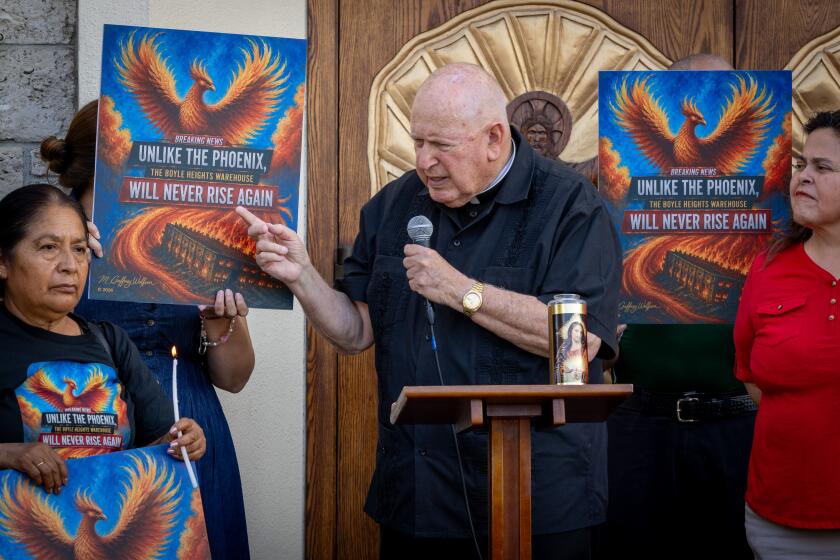
For generations, Resurrection has been a place of solace and resistance for residents angry about the latest indignity to befall the historic heart of Latino Los Angeles.

Your morning catch-up: L.A.’s ICE battles, toxic underground fires spread at California landfills and more big stories

What Prop. 40 supporters don’t get is that you can only smack a goose so much to give more until it bites back, which is what California billionaires are increasingly doing by throwing their cash around to defeat any political candidate exuding a whiff of progressivism.

For at least half a century, Border Patrol workers have used the onomatopoeic word “tonk,” referring to the sound of someone getting hit, as slang for undocumented immigrants.

As I stared into Cosmo’s tired eye, I remembered the lessons he and Hook taught us. Selflessness. A recommitment to the outcasts, the overlooked, the underdogs of society. A reminder that all good things end far sooner than we want.


